
Thanks To Prediction Markets, Women Are GirlMathing Their Way To A Gambling Addiction
"Prediction markets are no different to gambling. It’s betting but with a rebrand."


Unless you’ve been living under a rock, you’ve probably heard the rumors: Taylor Swift and Travis Kelce may (or may not be) getting married this weekend. Fans around the world are waiting in anticipation, wondering when and where the world’s most famous couple will tie the knot. Many are even putting money on it using prediction markets - trading platforms where people wager on real-world events and outcomes. From guessing the venue, the guest list to even betting on the bridal party lineup, people are putting their hard-earned dollars on the line in hopes of correctly predicting the inner workings of this year's biggest wedding.
Popular prediction market platforms like Kalshi and Polymarket allow users to bet on a wild array of public events: Donald Trump’s next public insult, upcoming guests on the 'Call Her Daddy' podcast, or even when the Iranian regime will fall. You may be thinking, how do these platforms stop insiders from rigging the game? They don't. These platforms thrive on ‘insider trading’ - it’s common knowledge that bettors utilize their expertise and insider access for profit.
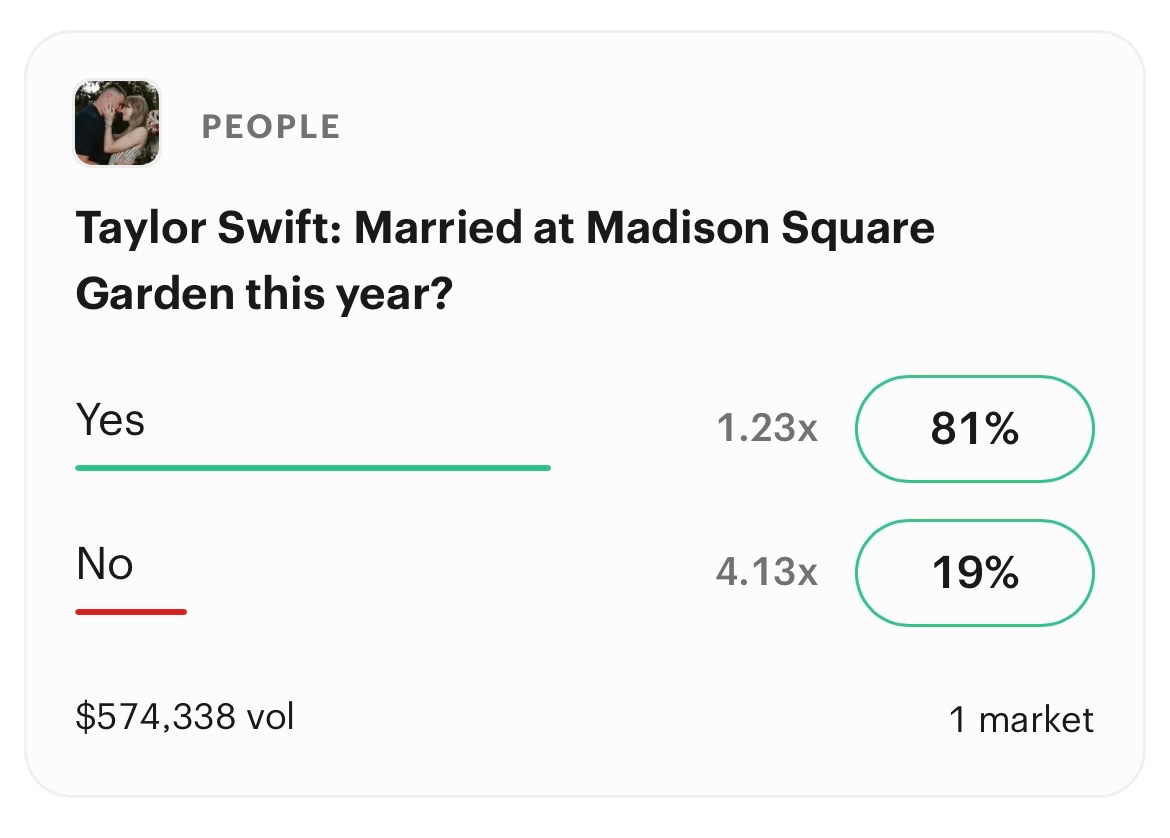
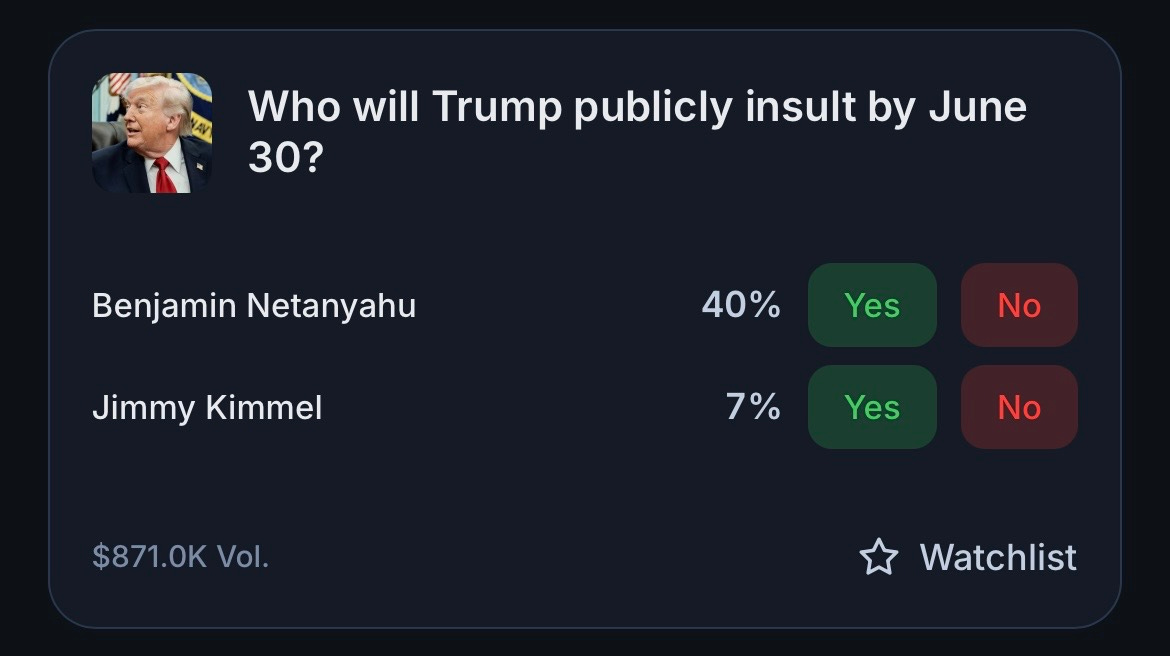
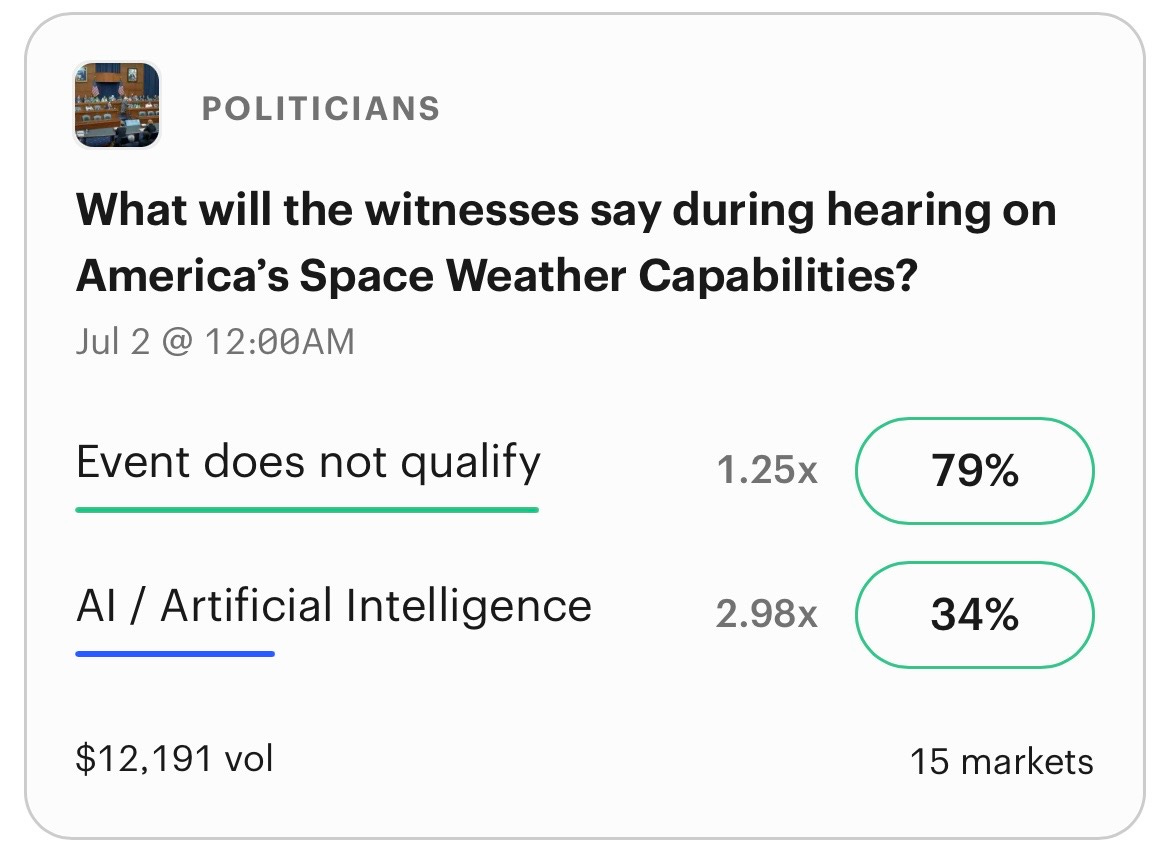
With such behaviors become normalized, even incentivized, on prediction platforms. For example, a U.S. Army Special Forces soldier made over $400,000 on Polymarket by using classified information to bet on the capture of Venezuelan President Nicolás Maduro. Similarly, during the Super Bowl, sudden surges on Polymarket and Kalshi correctly predicting Lady Gaga's surprise halftime appearance sparked widespread concerns over backstage leaks. One anonymous Polymarket user pocketed over $17,000 after perfectly predicting the show's guest lineup. This is precisely why these platforms strictly brand themselves as 'prediction markets' for 'traders.' This is why traditional gambling avenues have such strict regulations.
Now prediction markets are trying to woo women. As reported by The Atlantic, “both Polymarket and Kalshi are running social media campaigns that parrot the language of female empowerment and girlish memes.” And the strategy seems to be working. Within just ten months, the share of female traders on Kalshi reportedly jumped from 13% to 26%. Yet, these campaigns to allure potential female bettors have been incredibly shady. An Atlantic reporter uncovered sponsored Kalshi ads where creators weaponized the ‘Girl Math’ trend in attempt to win over new bettors.
In one now-deleted sponsored video, a Kalshi user said, “if I’m already scrolling news or pop culture anyway, might as well turn my hot takes into some free iced coffees... it’s kind of addicting but in a fun way.”
Somehow the marketing tactics get worse. This week The Wall Street Journal revealed that Polymarket had “paid creators to post fake wins” onto their social media pages. Creators who previously worked with the platform admitted they were given custom passwords for the site so they could generate authentic-looking, fabricated trades.
My estranged father is a gambler, although he always called it ‘beating the system.’ He somehow convinced himself he was smarter than the entire gambling industry, a delusion that ultimately cost us our house. It even left us stranded on a family holiday in America after he gambled away our spending money and cancelled our per-booked accommodation for cheaper alternatives without letting us know. My mum, brother, and I eventually had to close down our own bank accounts because he was secretly using them to fund his addiction. I haven't seen or spoken to him in eight years. He lost his daughter, son, wife, home, all because he couldn’t stop ‘beating the system.’
These prediction markets are no different to gambling. It’s betting but with a rebrand. It’s gambling but with a new PR team. You’re not profiting off your knowledge in pop culture. You’re not just having a bit of fun online. A bet is a bet. Gambling is still gambling. And gambling ruins people’s lives.